How to Clean Ceiling Fan Blades Without a Dust Shower
Turn the fan off, slide a pillowcase over each blade, and wipe grease with a damp cloth, never a spray on the motor. How often to clean and how to do it safely.
By Cool Ceiling Ideas editorial teamUpdated 6 min read
In this article
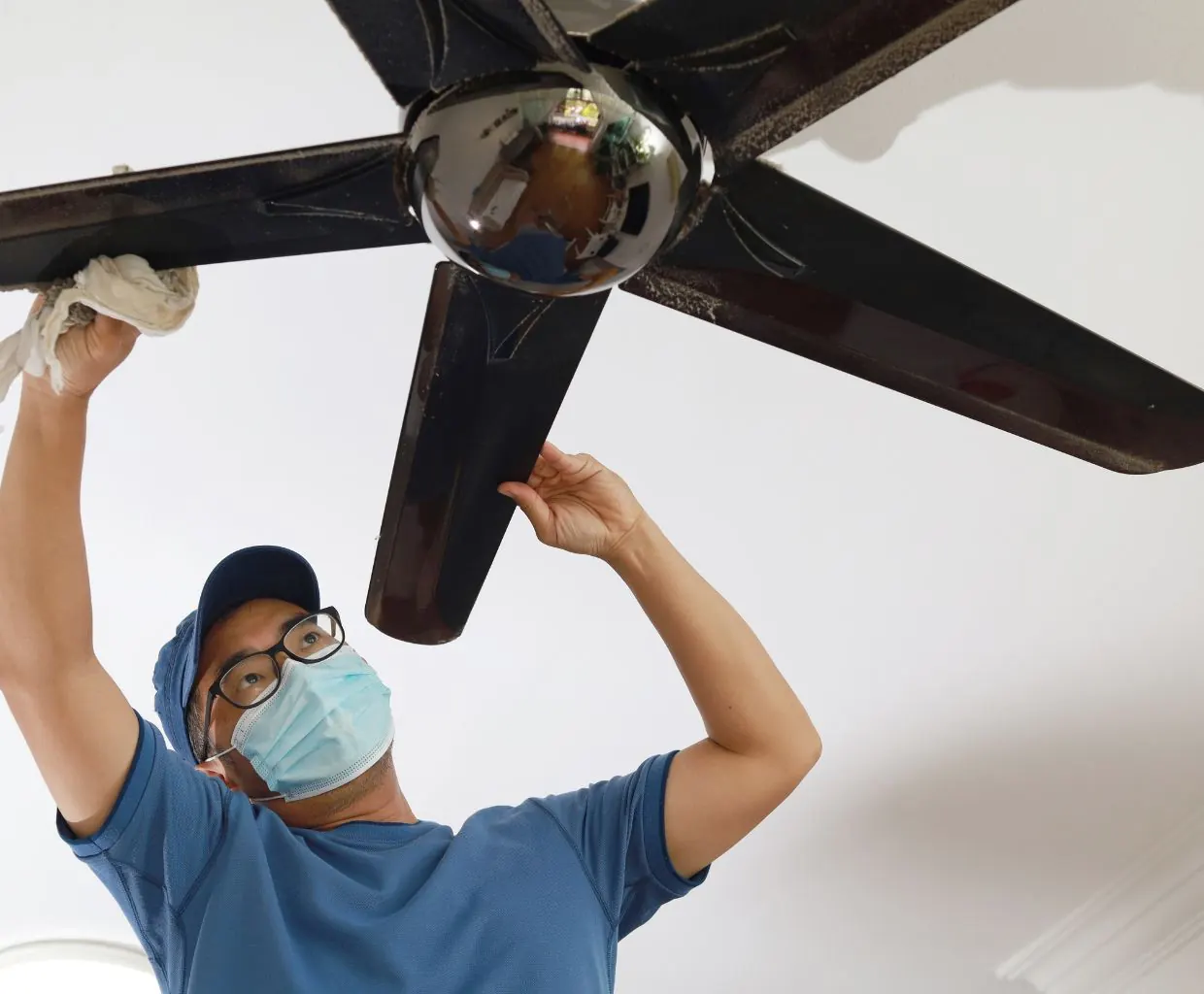
To clean a ceiling fan, turn it off, slide an old pillowcase over each blade and draw it back so the dust stays inside, then wipe any sticky spots with a cloth dampened with mild cleaner. Never spray anything straight onto the fan. For quick dusting between deep cleans, an extendable duster does the job from the floor.
Tip: Lay an old sheet under the fan before you start. Even with the pillowcase method, some dust falls, especially off the top of the motor housing.
How often should you clean a ceiling fan?
| Task | How often | Source |
|---|---|---|
| Light dusting | Every 1 to 3 months | Hunter |
| Deep clean (blades, housing, glass) | Every 3 to 6 months | Hunter |
| Dusting in summer, when the fan runs daily | Weekly | Home Depot |
| Check and tighten screws | At least twice a year | Harbor Breeze manual |
Hunter notes that kitchens, homes with pets and allergy households may need more frequent cleaning. In our view, the simplest schedule is to dust whenever you see a gray line on the leading edge of the blades, and do a full clean when you switch the fan’s direction in spring and fall (see ceiling fan direction).
Cleaning methods compared
| Method | Best for | Ladder needed? | Watch out for |
|---|---|---|---|
| Pillowcase | Regular dusting with little mess | Yes | Too much pressure can break a blade or unbalance it |
| Extendable duster | Quick dusting between deep cleans | No | Won’t shift sticky grease |
| Damp cloth with mild cleaner | Kitchen grease and grime | Yes | Spray the cloth, not the fan; some manuals forbid water |
| Soft dry cloth or brush | Wood, woven and natural-fiber blades | Yes | Never soak the blades |
What you need
- An old pillowcase (longer than a blade, if you have one)
- A sturdy step ladder, not a chair or table
- A soft, lint-free cloth, plus a second dry one
- Mild dish soap or a mild cleaner, or white vinegar and water
- Optional: an extendable ceiling fan duster with a flexible head
Step by step: how to clean ceiling fan blades
- Turn the fan off and wait. Switch it off at the wall and wait until the blades stop completely. Let bulbs and glass shades cool. For a deeper clean, Kichler suggests turning off the breaker as well.
- Set up safely. Put a sheet or drop cloth underneath and set your step ladder on firm, level ground (more on ladder safety below).
- Dust with a pillowcase. Slide the pillowcase over one blade, press lightly on the top, and draw it back toward you so the dust stays inside. Use light pressure: Hunter and Home Depot both warn that pushing too hard can break a blade or knock it out of balance. Repeat on every blade.
- Wipe grease or grime. Spray a mild cleaner, or 1 part vinegar to 3 parts water, onto a cloth, not onto the fan. Wipe the blade, then dry it with the second cloth. Skip this step if your manual says no water (see blade types below).
- Clean the motor housing, downrod and canopy. Use a soft, dry cloth only. Hunter’s reason for spraying the cloth and not the fan is to keep moisture out of the motor and light kit.
- Wash the glass. Remove glass shades and wash them in warm, soapy water. Kichler suggests lining the sink with a soft cloth so they don’t chip. Dry them completely before you put them back.
- Check the screws. While you’re up there, snug the blade screws. Harbor Breeze suggests checking the downrod assembly and tightening all screws at least twice a year; loose screws are a common cause of ceiling fan wobble and clicking.
Shake the pillowcase out outdoors, then wash it.
Extension-pole dusters: cleaning without a ladder
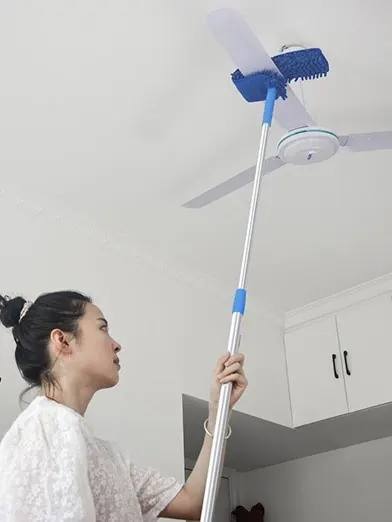
An extendable duster with a flexible head bends over and under each blade, so you can clean both sides from the floor. Hunter and Home Depot both suggest one for regular dusting, and Hunter puts them at roughly $15 to $25. We compare pole lengths and heads in our best ceiling fan dusters roundup. We’d use one for the quick monthly dusting and save the ladder for the twice-a-year deep clean, when you also wipe grease and check screws.
Available on AmazonCeiling fan dusters with an extension poleSee today's price, ratings and delivery options
Check priceSticky kitchen grease
Kitchen fans collect a film of cooking grease that dust sticks to, so a dry pillowcase only smears it. For that:
- Use a damp, not wet, cloth with a little mild dish soap (Kichler’s advice), or Hunter’s 1 part vinegar to 3 parts water. Home Depot suggests a 50/50 vinegar and water mix for heavy buildup.
- Spray the cloth, never the fan.
- Dry each blade thoroughly afterward.
- Skip abrasive cleaners, bleach, harsh chemicals, alcohol and baby wipes. Hunter and Kichler both warn they can damage fan finishes.
If you’re choosing a fan for over a cooking area, our guide to kitchen ceiling fans with lights covers what to look for.
Wood, metal and natural-fiber blades
Check your fan’s manual first. Cleaning advice differs between brands, and the manual wins.
- Wood and wood-look blades. Some manuals forbid water entirely. The Harbor Breeze manual we read says not to use water or a damp cloth on the fan at all, and allows an occasional light coat of furniture polish on wood blades. Hunter’s older manual warns that cleaning products may damage finishes and suggests soft brushes and cloths. Our pick for wood: dry dust with a pillowcase or soft cloth, and never soak the blades.
- Metal and sealed composite blades. The general method from Hunter and Kichler (a damp cloth with mild soap, then dry) is the usual approach for sealed finishes. Dry them well to avoid streaks.
- Woven, rattan, palm-leaf or fabric-look blades. Our research didn’t turn up specific manufacturer guidance for these. In our view, a soft brush or an extendable duster is the low-risk choice, and you should avoid getting woven material wet unless the manual says it’s fine. See our guide to bamboo and rattan ceiling fans for more on these styles.
Ladder safety
Cleaning a fan means working overhead, which is where most of the risk is. The US Consumer Product Safety Commission (CPSC) gives these ladder tips:
- Set the ladder on firm, level ground and make sure the spreaders are locked.
- Check the ladder’s load rating.
- Stay centered between the rails, and never stand on the top step or the bucket shelf.
- Keep the ladder away from doors, and only one person on it at a time.
Home Depot adds: use a step ladder, not a chair or table. The CPSC also reports that people 65 and older are 80% more likely than other adults to visit an emergency room for injuries involving ladders or stools. If that’s you, an extension-pole duster for routine cleaning, and a helper for the deep clean, is a sensible split.
Important: Cleaning doesn’t need tools beyond a cloth. If you open the switch housing, find loose wiring or a mount that moves, stop, turn off power at the breaker and call a licensed electrician.
Why clean your fan at all
Dust on the blades gets thrown back into the room every time the fan starts. The Sleep Foundation says fans can spread dust and allergens, which can make congestion worse, so a clean fan matters most in bedrooms and nurseries (see can ceiling fans make babies sick). Hunter also lists dust buildup among the causes of wobble, so regular cleaning helps the fan run smoothly, too.
Frequently asked questions
How often should you clean a ceiling fan?
Hunter recommends dusting every 1 to 3 months and a deeper clean every 3 to 6 months. Home Depot suggests dusting weekly in warmer months when the fan runs a lot. Kitchens, homes with pets and allergy households may need more.
What is the easiest way to clean ceiling fan blades?
The pillowcase method. Slide an old pillowcase over each blade and pull it back gently so the dust falls inside the case instead of onto the floor. Shake it out outdoors, then wash it.
How do you get sticky grease off ceiling fan blades?
Spray a mild cleaner, or 1 part vinegar to 3 parts water, onto a cloth (never onto the fan), wipe the blade, then dry it thoroughly. Check your manual first, because some manufacturers say not to use water at all.
Can I clean a ceiling fan without a ladder?
Yes. An extendable duster with a flexible head reaches both sides of the blades from the floor. It works well for regular dusting; for grease or a deep clean you'll usually still need a step ladder.
Should I clean the fan with it running?
No. Turn the fan off at the wall, wait until the blades stop completely, and let any bulbs and glass cool first. For a deep clean, Kichler suggests switching off the breaker too.
Can I use baby wipes or bleach on ceiling fan blades?
We'd skip both. Hunter and Kichler warn that abrasive cleaners, bleach, harsh chemicals, alcohol and baby wipes can damage fan finishes. A cloth lightly dampened with mild soap, or 1 part vinegar to 3 parts water, is the safer choice where your manual allows water.
Related guides
How-To
Best Ceiling Fan Dusters (2026) for Every Ceiling Height
Ceiling fan dusters and extension poles from OXO, Swiffer, Unger, DocaPole and Quickie, matched to your ceiling height, plus how to dust safely from the floor.
6 min read
How-To
Ceiling Fan Wobble: Why It Happens and How to Fix It
Most wobbly fans need tightened screws and a balancing kit, not a new fan. Here's the fix in order, and the signs that wobble is a safety problem.
8 min read
How-To
Ceiling Fan Direction: Which Way Should It Spin in Summer and Winter?
Counterclockwise in summer, clockwise on low in winter. How to check which way your fan spins, how to switch it on any fan, and how much it really helps.
8 min read
How-To
How to Install a Ceiling Fan Light Kit, Step by Step
Check that your fan can take a kit, cut the power at the breaker, open the switch housing, connect the light lead, mount the kit and fit bulbs within the limit.
7 min read