Kitchen Ceiling Fans with Lights: Brightness, Bulbs, Placement and Picks
How bright a kitchen fan light should be, integrated LED vs standard E26 bulbs, where to hang it over an island, keeping grease off, and four picks with stated lumens.
By Cool Ceiling Ideas editorial teamUpdated 8 min read
Our picks at a glance
- Check price on Amazon
Brightest integrated light
A 2,500-lumen dimmable LED, a DC motor and app control for around $300.
- 2,500 lumens
- 3000K, dimmable
- DC motor
- Check price on Amazon
Best near the sink
Damp-rated, with a 2,000-lumen light you can tune from 3000K to 5000K.
- 2,000 lumens
- 3000–5000K
- Damp-rated
- Check price on Amazon
Best budget pick
Three standard E26 sockets with 1,800 lumens of bulbs included, for under $200.
- 3 x E26 bulbs
- 1,800 lumens
- Pull chain
- Check price on Amazon
Best for open-plan kitchens
11,319 CFM for a big open room, with two E26 sockets you can fit with brighter bulbs.
- 2 x E26 bulbs
- 1,600 lumens
- 70 in. blades
Prices change often; Amazon shows the current price. As an Amazon Associate, Cool Ceiling Ideas earns from qualifying purchases.
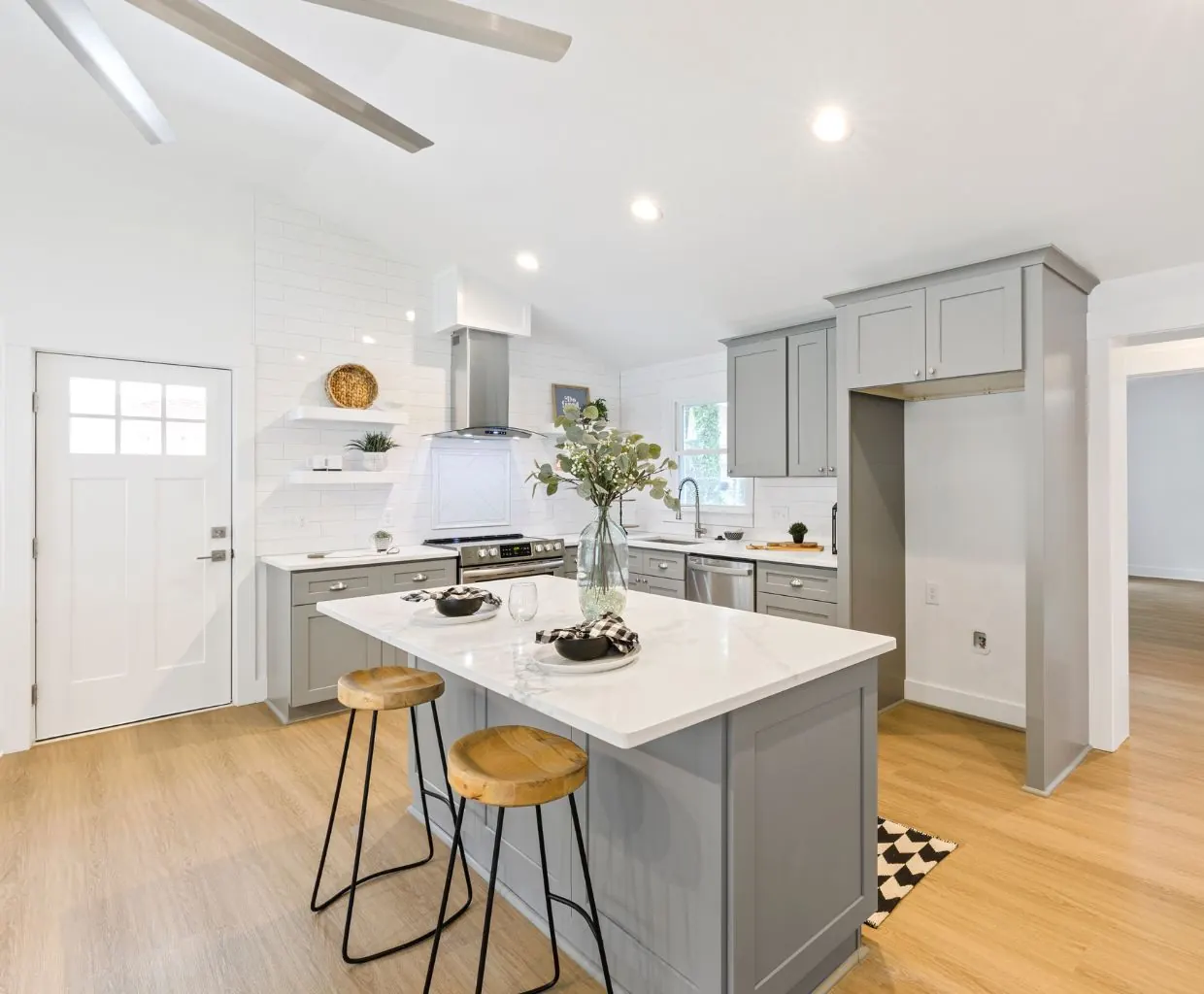
The short answer: for a kitchen, we’d look for a fan light at the bright end of what’s sold (the brightest kits we found are rated 2,000 to 2,500 lumens), a dimmable LED, and either a bright integrated module or standard E26 sockets so you can fit brighter bulbs later. Size the fan to the room, hang it with the blades at least 7 ft above the floor and clear of cabinets, and plan on wiping grease off it more often than any other fan in the house.
How bright should a kitchen fan light be?
Brightness is measured in lumens, not watts. On bulb packaging, the FTC’s Lighting Facts label lists it as “Brightness” in lumens. On ceiling fans, the maker states lumens for the light kit, and the numbers vary a lot. In our research shortlist they run from 1,050 lumens (three small bulbs) to 2,500 lumens (one integrated module).
We couldn’t find an official lumens-per-square-foot figure for kitchen fan lights from a government or standards source, so we won’t invent one. In our view, a fan light in a kitchen should be at the bright end of what’s sold, because it’s often the main overhead light. Treat it as one layer: counters and the cooktop usually need their own task lighting, since a fan light sits behind you while you work.
Two details worth knowing:
- Stated lumens can differ between sources. Hunter rates the light on its Gravity 60 in. at 2,000 lumens, while the ENERGY STAR test record shows 1,593 lumens.
- LEDs dim slowly with age. ENERGY STAR measures LED “lifetime” to the point where light output has dropped by 30%, so a little extra brightness leaves headroom.
Color temperature
Color temperature is measured in kelvins (K). The Lighting Facts label shows it as “Light Appearance” on a scale from 2,600K to 6,600K. Lower numbers give the yellowish warm white of an old incandescent bulb; higher numbers look whiter and cooler.
Most fan lights in our shortlist are 3000K. Hunter’s Bennett ships with warmer 2700K bulbs, and the Hunter ZenTech is tunable from 3000K to 5000K, which lets you switch between crisp light for cooking and a warmer tone in the evening. With E26 sockets, you choose the color yourself when you buy bulbs.
Integrated LED vs standard E26 bulbs
| Integrated LED module | Standard E26 sockets | |
|---|---|---|
| Brightness | Up to 2,500 lumens in our shortlist | Depends on the bulbs; you can upgrade |
| Color | Fixed, or tunable on some models | Any bulb color you like |
| When it fails | Maker’s replacement part; Hunter covers light kits for 3 years | Swap a bulb from any store |
| Look | Slim, flush lens | Visible bulbs or glass shades |
Integrated LEDs look sleeker, and the brightest kits we found are integrated, but you can’t fix a failed module with a store-bought bulb.
E26 sockets take ordinary medium-base bulbs, so you can fit brighter ones than came in the box, as long as you stay within the fixture’s rating. Hunter’s Bennett, for example, ships with 350-lumen bulbs (1,050 lumens in total), which is dim for a kitchen, but you can upgrade them. Check whether the included bulbs are dimmable: the Builder Plus bulbs aren’t.
Tip: Don’t put a standard wall light dimmer on a fan circuit. Hunter says it can make the fan hum and recommends a plain on/off switch with the fan’s own control handling dimming.
How we chose
We don’t test fans. We picked from the kitchen-light fans in our research shortlist on stated lumens, color temperature, socket type, motor and rating. Prices are from hunterfan.com in October 2026 and change often.
| Fan | Light | Lumens (stated) | Color | Motor |
|---|---|---|---|---|
| Hunter Zavia 60 in. | Integrated LED | 2,500 | 3000K, dimmable | DC |
| Hunter ZenTech 52 in. | Integrated LED | 2,000 | 3000–5000K, dimmable | DC |
| Hunter Builder Plus 52 in. | 3 x E26 | 1,800 | 3000K | AC |
| Hunter Phenomenon 70 in. | 2 x E26 | 1,600 | 3000K, dimmable | DC |
Hunter Zavia 60 in.
For: most kitchens that open onto a dining or family area. Its integrated 24 W LED is rated 2,500 lumens, the brightest in our shortlist, at 3000K and dimmable. It has a 6-speed DC motor, a handheld remote and HunterSMART app and voice control (Alexa, Google, Apple Home), and it moves 7,168 CFM on its EnergyGuide label. Hunter covers the motor for life and the light kit for 3 years.
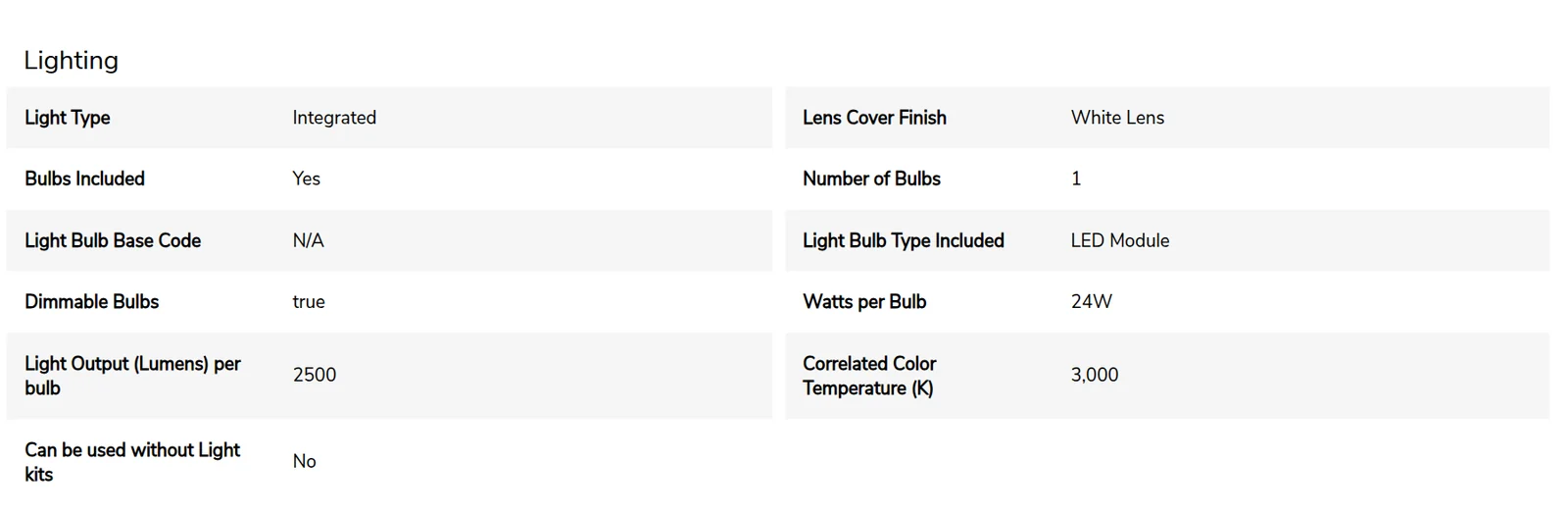
Trade-off: 60 in. is big for a small galley kitchen, and the light is a fixed color. It’s dry-rated. Around $300.
Check the Hunter Zavia on Amazon
Hunter ZenTech 52 in.
For: kitchens where the fan sits near the sink or kettle, and anyone who wants to change the light’s color. It’s damp-rated, and its 2,000-lumen integrated LED is dimmable and tunable from 3000K to 5000K. It has an ultra-slim 6-speed DC motor, a remote and HunterSMART control, and a no-light cap is included if you’d rather go fan-only. A 6 in. downrod is included (compatible up to 24 in.).
Trade-off: 5,444 CFM is modest next to the Zavia, and it costs around $400. For smaller kitchens, Hunter also sells a 44 in. ZenTech with the same 2,000-lumen tunable light.
Check the Hunter ZenTech on Amazon
Hunter Builder Plus 52 in.
For: a tight budget, or anyone who wants plain bulbs. It has three E26 sockets with 600-lumen, 3000K LED bulbs included (1,800 lumens in total), pull-chain control and a 3-speed AC motor. Because it’s an AC pull-chain fan, it works with retrofit smart controls such as a Lutron Caseta fan switch or the HunterSMART upgrade kit.
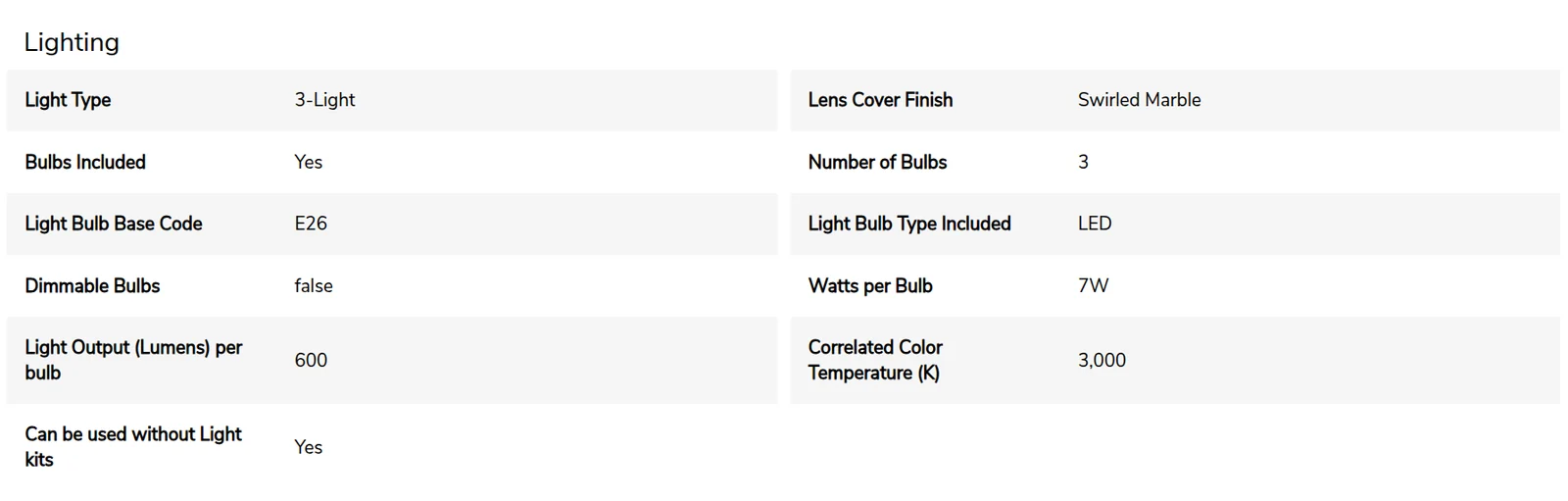
Trade-off: the included bulbs aren’t dimmable, efficiency is low (76 CFM/W on the label) and there’s no remote. Around $150 to $180.
Check the Hunter Builder Plus on Amazon
Hunter Phenomenon 70 in.
For: large open-plan kitchen and living spaces. It lists 11,319 CFM on its EnergyGuide label and has two E26 sockets with 800-lumen, 3000K dimmable bulbs (1,600 lumens in total), which you can swap for brighter ones. It has a 6-speed DC motor, a wall control and HunterSMART app and voice control.
Trade-off: 1,600 lumens is dim for a room this size until you upgrade the bulbs, and a 70 in. fan only suits a large room. Around $600. See our high CFM ceiling fans guide for more big fans.
Check the Hunter Phenomenon on Amazon
Where to hang a fan over a kitchen island
Start with size. A 12 x 14 ft kitchen (168 sq ft) calls for a 44 in. fan on ENERGY STAR’s chart; open-plan spaces of 225 to 400 sq ft take 50 to 54 in. Our ceiling fan size calculator does the math. If the kitchen and dining area form one long room, UC Berkeley’s Center for the Built Environment suggests splitting it into roughly square zones, which often means two fans.
Then the clearances, which apply in a kitchen as anywhere (our ceiling fan height guide explains each one):
- Blades at least 7 ft above the floor, ideally 8 to 9 ft. The measurement is to the floor, not the island top.
- Blade tips at least 18 in. from walls (ENERGY STAR); Hunter’s manuals ask for 30 in. to the nearest obstruction, which in a kitchen includes upper cabinets and the range hood.
- Blades at least 8 in. below the ceiling for decent airflow.
We’d center the fan over the island or the main walkway rather than over the cooktop, which also keeps the blades clear of the hood. On low ceilings, look at low-profile ceiling fans.
Important: Most ceiling boxes installed for light fixtures aren’t rated to hold a fan. Turn off power at the breaker, use a fan-rated box marked as acceptable for fan support, follow the manual and local code, and hire a licensed electrician if you’re unsure.
Damp ratings near the sink
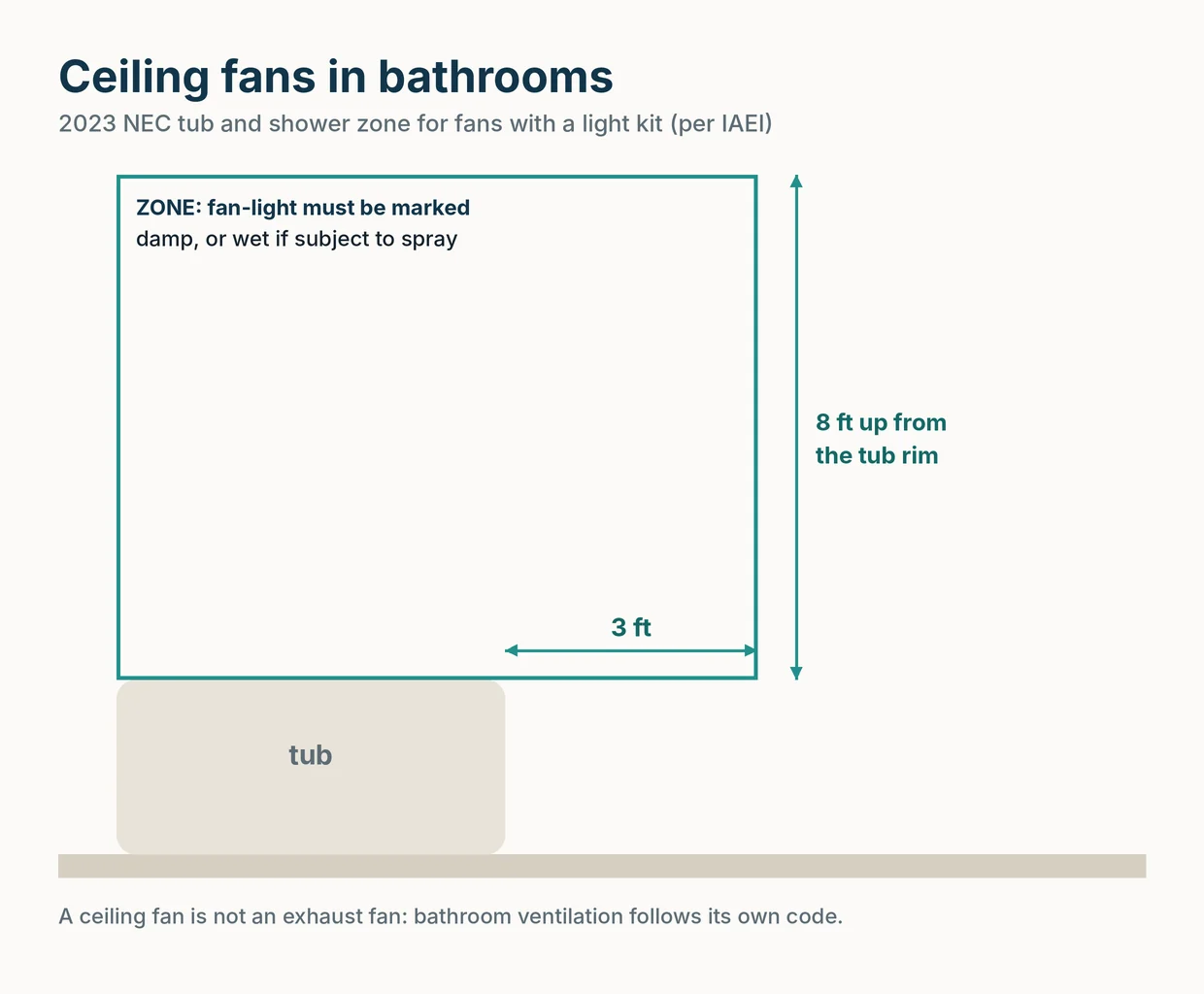
Hunter describes damp-rated fans as made for covered outdoor spaces like porches. The code rules we found that require damp- or wet-rated fan lights cover the zone around a bathtub or shower (within 3 ft horizontally and 8 ft vertically of the tub rim or shower threshold), not kitchens. If your fan will hang right over a steaming sink or kettle, a damp-rated model like the ZenTech adds some margin. Ask your electrician about local code.
Grease and cleaning
Kitchen fans collect a sticky film of grease and dust, and Hunter notes that kitchens may need cleaning more often than its usual advice of dusting every 1 to 3 months. The safe routine:
- Turn the fan off at the wall (and the breaker for a deep clean), wait for the blades to stop and let the light cool.
- Spray a mild cleaner, or 1 part vinegar to 3 parts water, onto a cloth, never onto the fan, so moisture stays out of the motor and light kit.
- Wipe each blade, then dry it. Skip abrasive cleaners, bleach and alcohol.
- Remove glass shades and wash them in warm soapy water; dry them fully before refitting.
Some manuals forbid water on the blades entirely, so check yours first.
Want app or voice control for the light while your hands are messy? Our best smart ceiling fans guide compares the platforms.
Frequently asked questions
How many lumens should a kitchen ceiling fan light have?
There's no official lumens figure for kitchen fan lights in the sources we use, so compare the stated lumens between fans. Kits in our shortlist range from about 1,050 to 2,500 lumens. In a kitchen we'd lean toward the top of that range, plus under-cabinet lights for the counters.
What color temperature is best for a kitchen fan light?
Most fan lights we looked at are 3000K, a warm white. If you want crisper light for cooking and a warmer tone in the evening, a tunable light like the Hunter ZenTech (3000K to 5000K) lets you switch.
Is it better to get a fan with standard bulbs or an integrated LED?
Standard E26 sockets let you swap in brighter or different-colored bulbs and replace a failed bulb cheaply. Integrated LEDs can be brighter and slimmer, but when the module fails you need the maker's replacement part. Hunter covers its light kits for 3 years.
Does a kitchen ceiling fan need to be damp-rated?
We found no rule requiring it. The code rules that require damp- or wet-rated fan lights cover the zone around a bathtub or shower. A damp-rated fan gives extra margin near a steamy sink or kettle, but check local code with your electrician.
How do you clean grease off a kitchen ceiling fan?
Turn the fan off, spray a mild cleaner or 1 part vinegar to 3 parts water onto a cloth (never onto the fan), wipe the blades and dry them. Wash glass shades in warm soapy water. Check your manual first, since some forbid water.
Where should a ceiling fan go in a kitchen?
We'd center it over the island or the main walkway rather than over the cooktop, with the blades at least 7 ft above the floor and clear of upper cabinets and the range hood. In a long kitchen-dining room, two fans often work better than one.
Related guides
Room Ideas
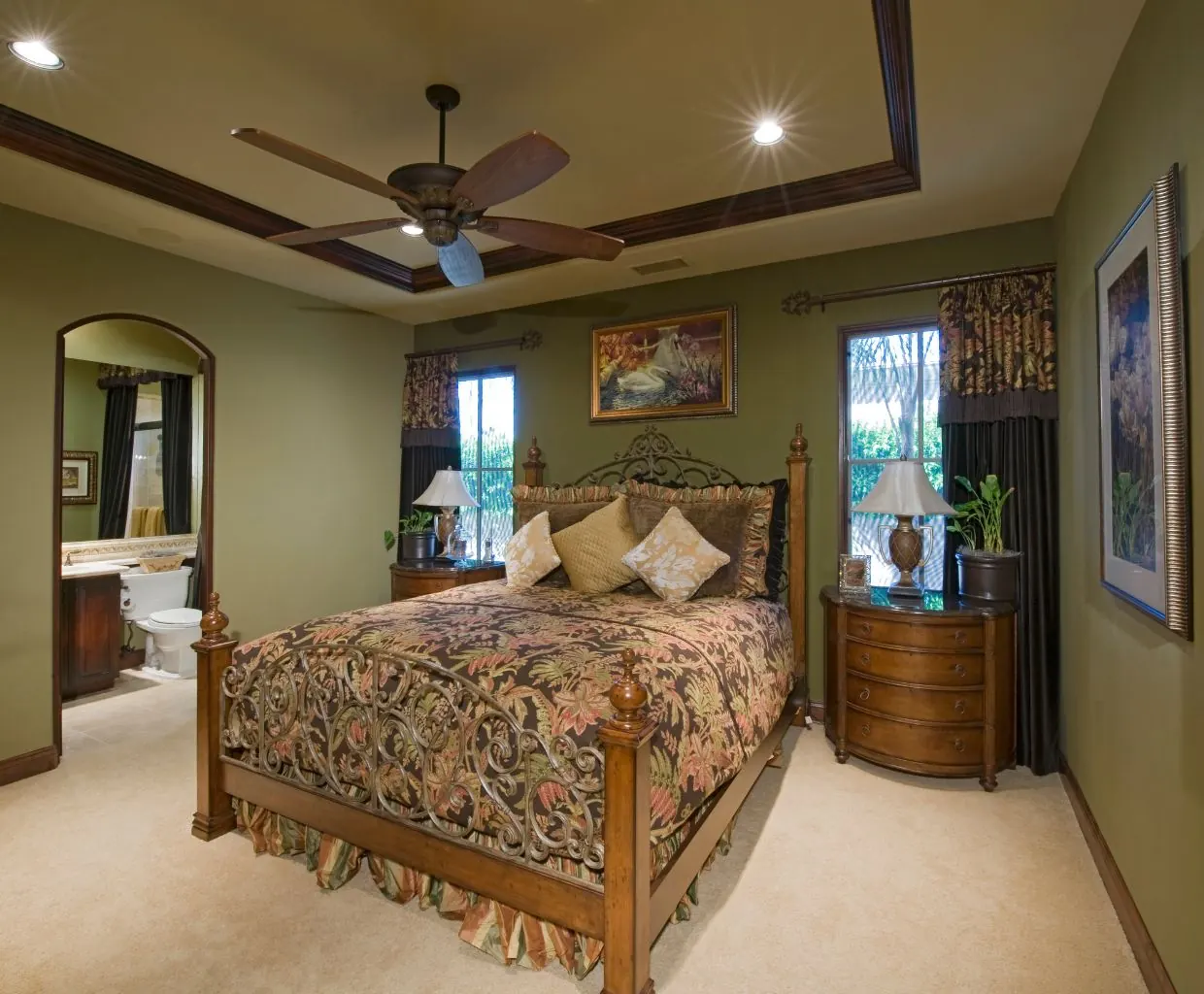
Best Ceiling Fans for Bedrooms in 2026: Quiet, Dimmable Picks
Seven bedroom ceiling fans picked by need: quiet DC motors, dimmable lights, low ceilings, control from bed and budget. Plus sizing, placement and sleep tips.
11 min read
Room Ideas
Bathroom Ceiling Fans: Ratings, Sizing and Safe Placement
A bathroom ceiling fan needs the right damp or wet rating, a small blade span and room to clear walls and heads. What the 2023 NEC zone means, plus four picks.
9 min read
Ceiling Fans
Best Ceiling Fans With Lights in 2026: Bright, Dimmable Picks
Seven ceiling fans with lights compared by stated lumens, color temperature and dimming, from a 2,500-lumen kitchen fan to standard-bulb and wet-rated picks.
10 min read
Room Ideas
Quietest Ceiling Fans in 2026: Picks for Bedrooms
What independent lab testing says about quiet ceiling fans, six bedroom picks with honest notes on missing noise data, and how to quiet a fan you own.
9 min read