Bladeless Ceiling Fans: What They Really Are and Whether They're Worth It
Bladeless ceiling fans still have blades: they retract or hide behind a cage. How they compare on airflow, noise, safety and cleaning, and who they suit.
By Cool Ceiling Ideas editorial teamUpdated 6 min read
Our picks at a glance
- Check price on Amazon
Retractable-blade example
The one retractable-blade fan from an established brand we could confirm on a US retailer page.
- 48 in retractable blades
- AC motor, 3 speeds
- Remote, dimmable LED
- Check price on Amazon
Enclosed-blade alternative
Blades spin inside a three-band cage, so they stay covered while the fan runs.
- 23 in blades inside cage
- 1,099 CFM
- Damp rated
Prices change often; Amazon shows the current price. As an Amazon Associate, Cool Ceiling Ideas earns from qualifying purchases.
A “bladeless” ceiling fan still has blades. Either they retract into the body when the fan is off, so it looks like a pendant light, or they’re enclosed behind a cage, grille or diffuser. These fans suit rooms where the fixture’s looks matter more than maximum airflow. Only one retractable model from an established brand turned up in our research on a US retailer page: the Fanaway Classic 48 in, sold at Home Depot for around $700.
What a “bladeless” ceiling fan really is
Three kinds of product get sold under this name:
- Retractable-blade fans. When the fan is off, the blades fold away into the pendant. When it turns on, centrifugal force swings them out. Fanaway is the best-known maker. The catch: the blades are fully exposed while the fan is running.
- Enclosed-blade fans. A small fan spins inside a cage. The Progress Lighting Gulliver is the clearest example: Progress says its three-blade fan sits inside a three-band cage. More of these are in our guide to caged ceiling fans.
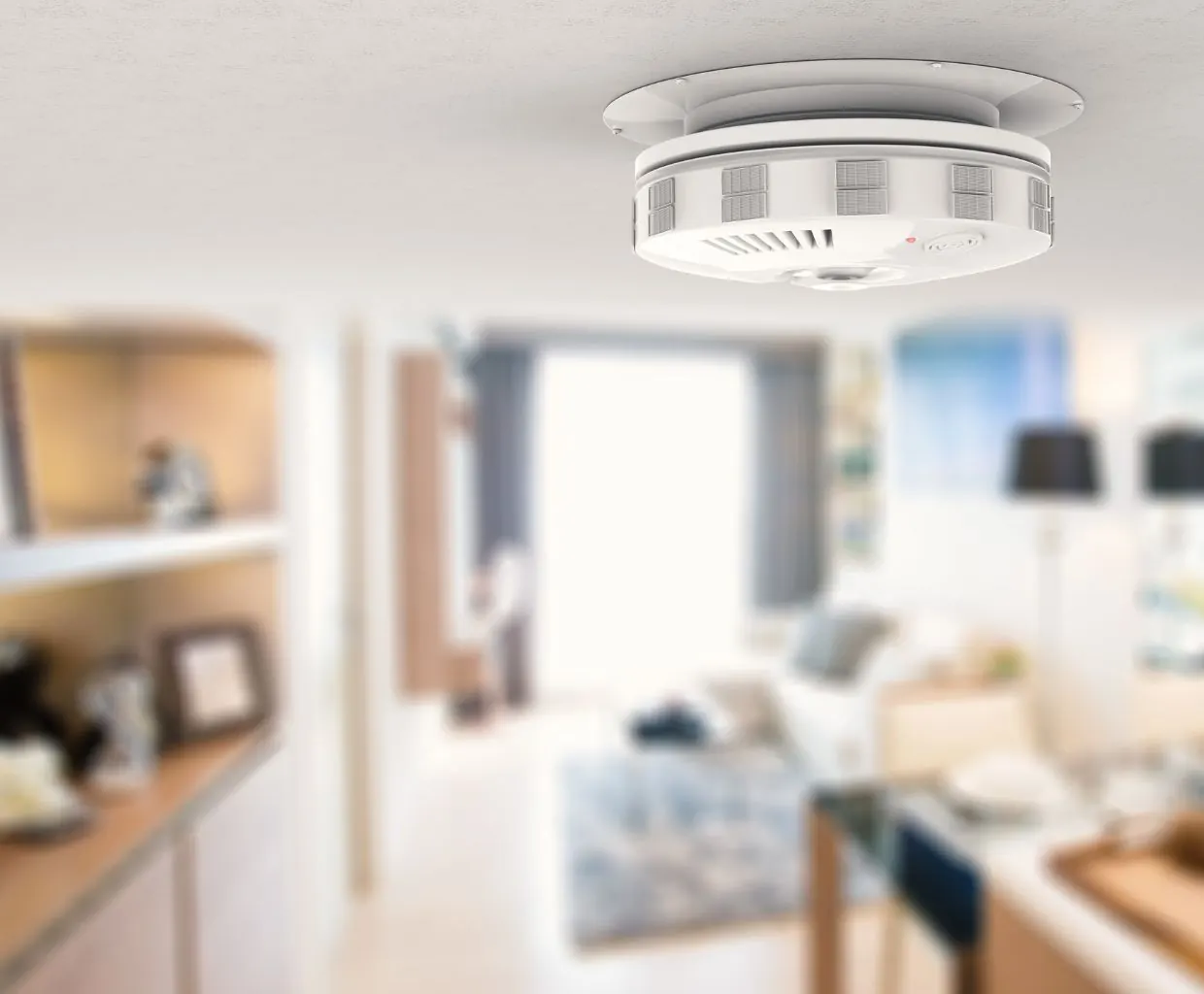
- Flush fan-lights. A round fixture, like the one in the photo above, with a small fan hidden behind vents or a diffuser. Many online listings use this design. None made our verified shortlist, because we couldn’t confirm airflow figures or safety listings from an established brand.
| Type | Where the blades are | Blades exposed while running? | Verified example |
|---|---|---|---|
| Retractable-blade | Fold into the pendant when off | Yes | Fanaway Classic 48 |
| Enclosed-blade | Spin inside a cage or grille | No, behind the cage | Progress Lighting Gulliver 23 |
| Flush fan-light | Small fan behind vents or a diffuser | No | None we could verify |
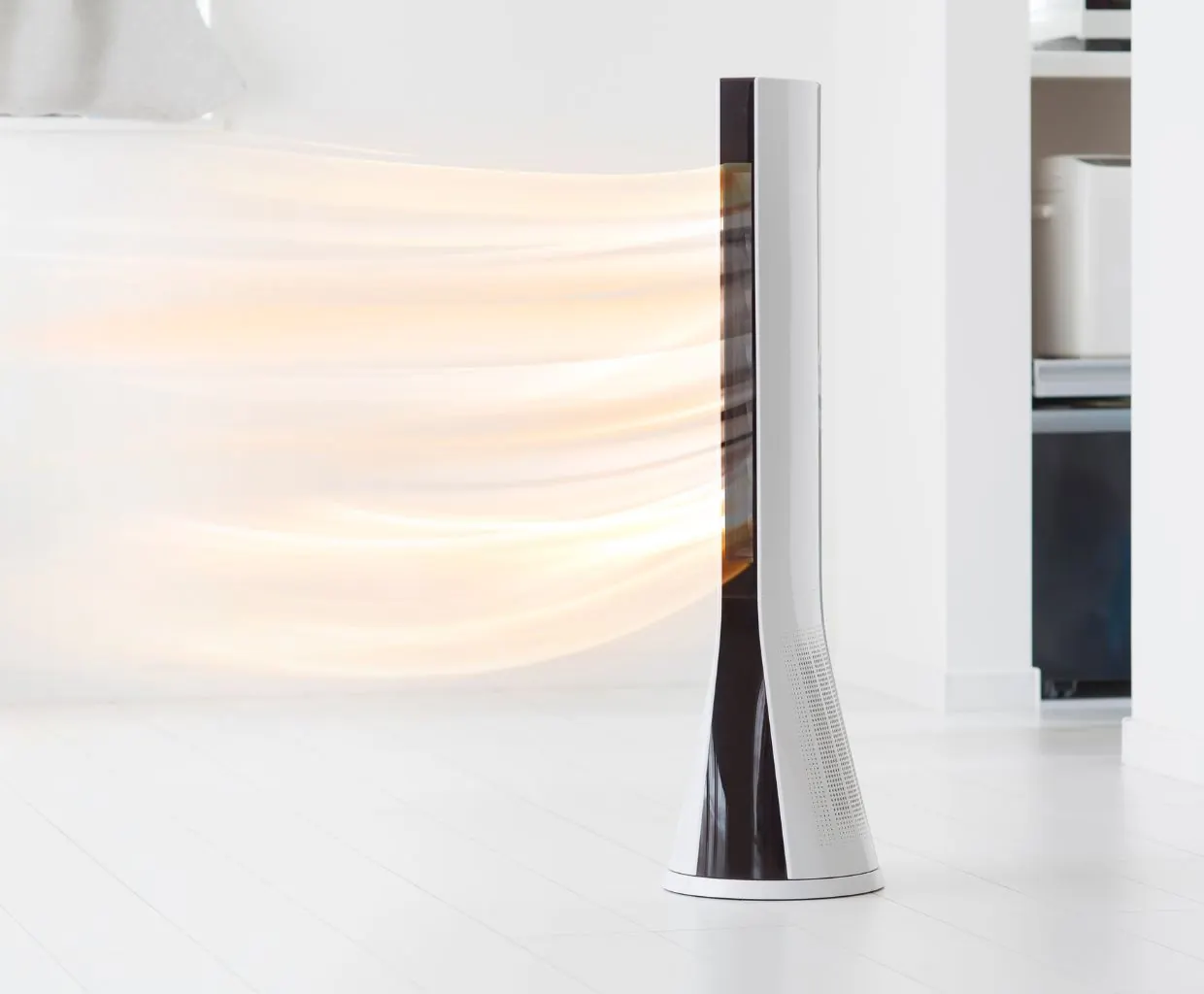
They’re not related to bladeless floor and tower fans, which hide an impeller in the base. Those are covered in ceiling fan alternatives.
How much air do they move?
Less than the name might suggest, and often less than a plain fan of similar price. Our take: judge them on the published numbers, and here there aren’t many.
- Fanaway Classic: Fanaway’s own spec page lists figures for its home market’s 240 V supply, and we found no US airflow figure. It also isn’t in the ENERGY STAR certified list. So there’s no verified number to compare.
- Progress Gulliver: 1,099 CFM at 32 W. A typical 44 in low-profile fan such as the Hunter Minimus lists 3,181 CFM, so the Gulliver moves about a third as much air.
- Flush designs pay a price. ENERGY STAR notes that hugger fans move less air because their blades sit close to the ceiling. UC Berkeley’s Center for the Built Environment recommends at least 8 in, and ideally 12 in or more, between the blades and the ceiling so the fan isn’t “starved” of air. A fan tucked inside a flush fixture can’t meet that.
Tip: Before buying any “bladeless” fan, look for an airflow (CFM) figure on the EnergyGuide label or spec sheet. If the listing gives none, you have no way to compare it with a regular fan.
In our view, a bladeless ceiling fan is best treated as a light fixture that also makes a breeze. If moving air is the main goal, a regular fan sized with our ceiling fan size calculator will do more for less money.
Noise
We found no published noise measurements for the models we could verify, and we don’t repeat “silent” or “whisper-quiet” claims from listings as fact. The Fanaway Classic uses an AC motor; the Gulliver does too. If quiet operation is your priority, start with fans that document their specs in more detail, in our list of the quietest ceiling fans.
Safety: what “bladeless” doesn’t mean
- Retractable blades are exposed while running. Every ceiling fan manual in our research requires at least 7 ft between the floor and the blades, and that applies here too.
- No fan is approved for use over a bunk bed. None of the manufacturers we checked says any model is suitable over one. A 2023 Pediatrics study estimated about 2,300 head injuries a year in children from ceiling fan contact, often when older kids jumped from bunk or loft beds. See ceiling fans for bunk beds for safer setups.
- Enclosed blades help with reach, not installation. A cage keeps fingers and toys off the blades, but the fan still needs proper height and mounting.
Important: Hang any ceiling fan from a box marked for fan support or from the building structure. Turn off power at the breaker, follow the manual and local code, and hire a licensed electrician if you’re unsure.
Cleaning
Hidden blades don’t mean no dust. Turn the fan off and let it stop completely before cleaning anything.
- Retractable fans: the blades fold away when off, so most of your dusting is the pendant body and glass. Because the blades only extend while spinning, check the manual for how to clean them. Never reach toward a running fan.
- Enclosed and flush fans: cages and vents catch dust. An extendable duster with a flexible head can reach between cage bands. Spray any cleaner onto the cloth, not the fixture, so moisture stays out of the motor and light, and wash glass shades in warm soapy water.
The models we could verify
This isn’t a ranked list. The retractable category is thin in the US, and these are the two examples with specs we could confirm on manufacturer or retailer pages.
Fanaway Classic 48
The Classic is a 48 in fan with four retractable blades that fold into the pendant when off. Home Depot lists it in Chrome with clear blades (212926010) and Antique Black with smoke blades (212927010). It has an AC motor with 3 speeds, a remote, and dimmable vintage LED bulbs, according to Home Depot’s US listing. Fanaway sells in the US through Beacon Lighting America.
Trade-offs: around $700 is a lot for a fan with no published US airflow figure, and it isn’t ENERGY STAR certified. Fanaway’s warranty page lists 2 years in-home plus 7 years on the motor, but that’s stated for its home market, so confirm the US terms before buying. Other Fanaway models (Veil, Lilo, Nimbus, EVO2) appear on Fanaway’s site and some on Home Depot Canada, but we couldn’t confirm a US listing for them. We’d buy the Classic for its looks in a dining or living room, not for heavy cooling.
Check the Fanaway Classic 48 on Amazon
Progress Lighting Gulliver 23
The enclosed-blade alternative: a 23 in three-blade fan inside a three-band cage, 23.5 in wide by 18.1 in tall. It moves 1,099 CFM at 32 W, has an AC motor with 3 speeds, a remote and three dimmable 5.5 W vintage LED bulbs, and is cETLus damp listed for covered outdoor spaces. At around $600, it’s a style piece for a small room. Reverse isn’t on the remote.
Check the Progress Lighting Gulliver 23 on Amazon
Who a bladeless ceiling fan suits
Good fit:
- Dining rooms and living rooms where the fixture is seen switched off more often than on.
- Small to medium rooms that need a light first and a gentle breeze second.
- Anyone who simply dislikes the look of exposed blades.
Skip it if:
- You need strong airflow in a large room. A standard fan from our ceiling fan size guide will do far more.
- The ceiling is under 8 ft. A low profile ceiling fan is the safer, cheaper choice.
- You want it over a bunk bed or within a child’s reach.
- You want verified efficiency figures. We’d pick one of the energy efficient ceiling fans with ENERGY STAR certification instead.
Frequently asked questions
Do bladeless ceiling fans really have no blades?
No. Ceiling models sold as bladeless either have blades that fold away into the body when the fan is off, or blades hidden behind a cage, grille or diffuser. They look bladeless, but a rotor still moves the air.
Do bladeless ceiling fans work as well as regular fans?
Usually not for big rooms. The enclosed-blade Progress Gulliver lists 1,099 CFM, about a third of a typical 44 in low-profile fan, and Fanaway publishes no US airflow figure for its retractable Classic. Treat them as a light that also makes a breeze.
Are bladeless ceiling fans safe for kids?
Retractable blades are exposed while the fan runs, so the usual rule applies: at least 7 ft from floor to blades, and never within reach of a top bunk. Enclosed-blade fans keep fingers off the blades, but the same installation rules still apply.
Are bladeless ceiling fans quieter?
We found no published noise measurements for the models we could verify, so there's no evidence either way. Treat 'silent' claims in listings as marketing until a maker publishes a sound figure.
How much does a bladeless ceiling fan cost?
The Fanaway Classic 48 in sold for around $700 at Home Depot in October 2026, and the enclosed-blade Progress Gulliver for around $600 from Progress. A regular low-profile fan costs far less and moves more air.
Are bladeless ceiling fans energy efficient?
There's little evidence that they are. The Fanaway Classic isn't ENERGY STAR certified and has no published US airflow figure, and the Progress Gulliver lists 1,099 CFM at 32 W, about 34 CFM per watt. If efficiency matters, pick an ENERGY STAR certified fan instead.
Related guides

Ceiling Fans
Caged Ceiling Fans: Industrial Style, Kids' Rooms and 5 Picks
Most caged ceiling fans only cage the light. What a cage really does, where these fans make sense, how to clean them, and five verified picks.
7 min read
Ceiling Fans
Ceiling Fan Alternatives: What to Use When a Ceiling Fan Won't Work
Low ceiling, rental or no wiring? Tower, pedestal, wall, window and bladeless fans, portable AC and mini-splits compared, with real running costs.
8 min read

Ceiling Fans
Best Low Profile Ceiling Fans in 2026 for Low Ceilings
Hugger fans for ceilings under 8 ft: how low each one sits, how much air it moves, and which to pick for small, standard and large rooms.
12 min read
Ceiling Fans
Best Outdoor Ceiling Fans in 2026: Damp vs Wet Rated Picks
Damp-rated fans belong under a solid roof; wet-rated fans can take rain. Six picks for porches, pergolas and the coast, plus the warranty fine print.
11 min read