Can Ceiling Fans Make Babies Sick? Myths, Evidence and Nursery Tips
No, a ceiling fan won't make your baby sick. What it can do (dry air, dust, drafts), what the AAP says about overheating, and how to run a nursery fan safely.
By Cool Ceiling Ideas editorial teamUpdated 7 min read
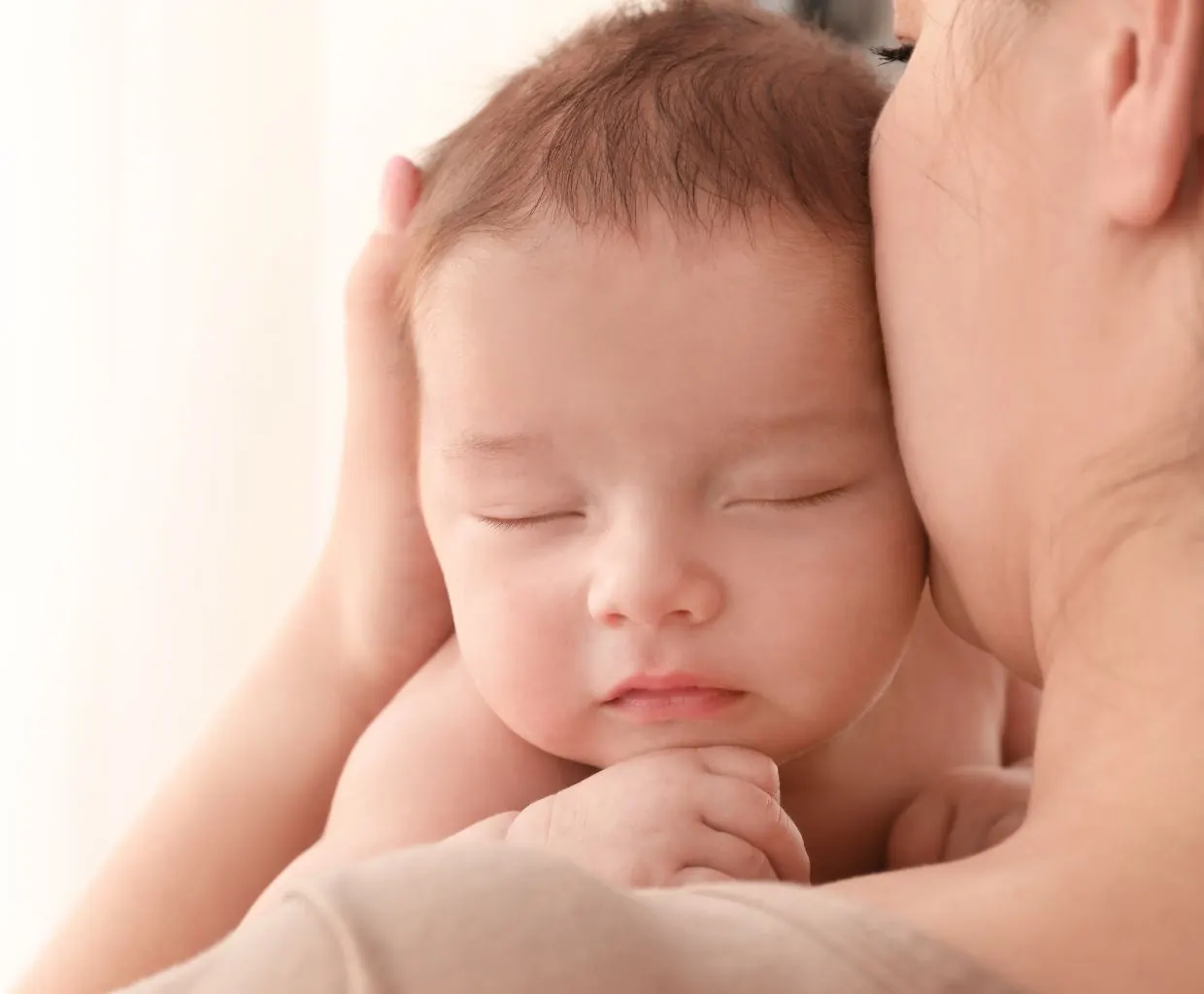
The short answer: no. We couldn’t find any guidance from the American Academy of Pediatrics (AAP) or the National Institutes of Health (NIH) saying a ceiling fan makes babies sick. In fact, neither one mentions fans in its safe-sleep advice at all. A fan can still cause a few small problems: it can dry the air, stir up dust from dirty blades, and chill a baby if the crib sits right in its downdraft. Run it on low, keep it clean and keep the crib out of the direct breeze, and you avoid all three.
Note: This article is general information, not medical advice. If your baby seems unwell, or you’re unsure how warm to keep the nursery, talk to your pediatrician.
Where the “fans make babies sick” worry comes from
Most of the worry is about drafts: the idea that cool, moving air gives a baby a cold. No pediatric authority we could find supports that. What the evidence does describe is milder:
- Dry air. Healthline (medically reviewed) lists dry eyes, dry skin and dry nasal passages among the drawbacks of sleeping with a fan on, and says dry air may trigger extra mucus or congestion.
- Dust and allergens. Healthline and the Sleep Foundation both say fans can spread dust and pollen, which can make congestion worse. Dusty blades throw more of it around.
- A direct, concentrated breeze. Healthline mentions muscle stiffness from airflow aimed at one spot for hours.
Be aware that these findings come from sources written about adults. Applying them to infants is a reasonable inference, but it’s our inference, not something a pediatric group has studied. None of them describes an illness caused by a fan.
What the AAP and NIH say about temperature and overheating
The official safe-sleep guidance is mostly concerned with the opposite problem: babies getting too hot.
- Overheating raises SIDS risk. The AAP says on HealthyChildren.org that overheating can increase the risk of sudden infant death syndrome (SIDS). The NIH’s Safe to Sleep campaign (run by NICHD) adds that overbundling a baby for the room temperature leads to overheating, and that overheated babies are at higher risk of SIDS and heat-related death.
- Signs of overheating: sweating, flushed or hot skin, or a hot chest.
- Clothing: the AAP says a baby needs only one more layer than an adult would wear in the same room, and no hats indoors once you’re home from the hospital.
- Room temperature: neither the AAP nor NICHD sets a required number. NICHD says to keep the room at a temperature that’s comfortable for you. Its interactive nursery illustration shows a thermostat at 68 to 72°F, but that’s an example in a picture, not an official rule.
So where does a ceiling fan fit? Officially, nowhere. In our view, a fan on low is one sensible way to keep a warm nursery comfortable, together with light clothing. It isn’t a safety device, though, and it doesn’t replace the basics the guidance stresses, starting with placing your baby on their back to sleep.
The 2008 study linking fans to lower SIDS risk
You’ll often see one study quoted on this topic, so here’s what it found and what it can’t tell you.
In 2008, Kaiser Permanente researchers (Coleman-Phox, Odouli and Li) published a case-control study in the Archives of Pediatrics & Adolescent Medicine. They compared 185 babies who died of SIDS with 312 matched control babies in 11 California counties, and asked about the sleep environment, including whether a fan was running.
Abstract summaries of the paper report that fan use during sleep was associated with a 72% lower risk of SIDS (adjusted odds ratio 0.28, 95% confidence interval 0.10 to 0.77). We could only read these figures in summaries of the abstract, not in the paper itself. According to Kaiser’s press release, the link was strongest in riskier sleep environments: about 94% lower risk in rooms warmer than about 69°F (21°C), and lower risk for babies placed on their stomach or side or sharing a bed with someone other than a parent. For babies already sleeping in good conditions, it made little difference.
Before reading too much into it:
- It’s observational. A case-control study can show an association, not cause and effect.
- Memory and family differences can skew it. Parents were asked about events after the fact, and families who run fans may differ in ways the study didn’t measure.
- It’s small. Fewer than 200 SIDS cases, and the confidence interval is wide.
- The mechanism is a guess. The idea that moving air stops a baby from rebreathing exhaled carbon dioxide is a hypothesis, not a proven effect.
- It isn’t a recommendation. NICHD said at the time that there’s no substitute for back-sleeping, and no AAP or NICHD safe-sleep guidance recommends fans.
Our take: the study is a reason not to worry about a gently running fan. It’s not a reason to buy one as SIDS protection.
How to run a ceiling fan safely in a nursery
These tips combine manufacturer installation rules, an injury study and common-sense advice. Where a tip isn’t from the AAP, we say so.
- Keep it on low. We’d stick to the lowest speed that keeps the room from feeling stuffy: it stirs the air without a strong draft. On most fans, summer mode (counterclockwise) blows air down; see our ceiling fan direction guide to check yours.
- Don’t put the crib directly under the fan. A ceiling fan blows straight down, so keep the crib out of the strongest airflow and well clear of the blade sweep. This is common advice, not an AAP rule.
- Clean the blades regularly. Dusty blades spread dust every time the fan starts.
- Mount it properly. Manufacturer manuals require the blades to be at least 7 ft above the floor and the fan to hang from a fan-rated box secured to the framing. Turn off power at the breaker before any work, follow the manual and local code, and hire a licensed electrician if you’re unsure. A fan that wobbles from the mount needs checking before you use it again (see ceiling fan wobble).
- Never lift a child toward a spinning fan. A 2023 Pediatrics study of US emergency room data estimated about 2,300 head injuries a year in children from ceiling fan contact. Infants and toddlers were usually hurt when an adult lifted them up into the fan; older kids when jumping off bunk or loft beds. If a nursery will later become a shared room, see our ceiling fan for bunk beds guide.
- Keep the remote out of reach. Hunter warns that a swallowed lithium coin battery from a remote can cause severe internal burns and death in as little as 2 hours.
- Check your baby, not just the thermostat. Sweating, flushed skin or a hot chest are the signs of overheating the AAP and NICHD list.
We’d also favor a quiet fan, so the fan itself doesn’t become one more thing that wakes the baby. Our nursery ceiling fan picks and our list of the quietest ceiling fans focus on that.
Fan concerns at a glance
| Concern | What the sources say | What helps |
|---|---|---|
| Dry air | Healthline links fans to dry eyes, skin and nasal passages (adult sources) | Run the fan on low; ask your pediatrician about congestion |
| Dust and allergens | Healthline and the Sleep Foundation say fans spread dust and pollen | Clean the blades regularly |
| Direct breeze | Healthline mentions stiffness from airflow aimed at one spot | Keep the crib out of the downdraft |
| Overheating | AAP and NICHD say overheating raises SIDS risk | Light clothing; check for sweating or a hot chest |
| Injuries | A 2023 Pediatrics study estimated about 2,300 child head injuries a year from fan contact | Blades at least 7 ft up; never lift a child toward a fan |
Tip: When the nursery feels warm, check your baby before you turn up the fan. If they’re sweating or their chest feels hot, remove a layer first: a fan helps alongside light clothing, not instead of it.
When to talk to your pediatrician
Ask your pediatrician if your baby often seems congested, has dry or irritated skin, or if you’re unsure how to dress them for the room. They know your baby’s health and your home’s climate, and they can tell you whether a fan, a humidifier or a change in clothing makes sense. If you notice signs of overheating, take off a layer and cool the room. If your baby seems unwell, call your pediatrician.
Frequently asked questions
Is it safe to run a ceiling fan in a baby's room?
For most families, yes. No AAP or NIH safe-sleep guidance warns against ceiling fans, though none recommends them either. Run the fan on low, keep the crib out of the strongest airflow, keep the blades clean and make sure the fan is mounted on a fan-rated box.
Can a ceiling fan give my baby a cold?
We found no pediatric source saying a fan causes illness. A fan can dry the air and stir up dust, which adult-focused medical sources link to dry eyes, dry nasal passages and congestion. If your baby seems congested or unwell, talk to your pediatrician.
Do ceiling fans prevent SIDS?
No one has shown that. A 2008 case-control study found an association between fan use and lower SIDS risk, but it was observational and small, and no AAP or NIH guidance recommends fans for SIDS prevention. Back-sleeping and avoiding overheating are what the guidance stresses.
What temperature should a nursery be?
Neither the AAP nor the NIH sets a required number. The NIH's Safe to Sleep campaign says to keep the room at a temperature that's comfortable for you, and the AAP says to dress a baby in no more than one layer more than an adult would wear.
Should the fan point at the crib?
Better not. A ceiling fan blows straight down, so place the crib away from the area directly under it and out of the blade sweep. A gentle stir of air across the room is enough to keep it from feeling stuffy.
Can I leave a ceiling fan on all night in the nursery?
No AAP or NIH guidance says you can't. Keep it on low, keep the crib out of the direct downdraft, dress your baby in no more than one layer more than you'd wear, and check for signs of overheating such as sweating or a hot chest.
Related guides
Room Ideas
Best Nursery Ceiling Fans in 2026: Quiet, Safe Picks
Quiet DC and low-profile fans with dimmable lights and remotes for a baby's room, plus safe mounting, crib placement and what the AAP says about overheating.
9 min read
Room Ideas
Ceiling Fans for Bunk Beds: Clearance, Placement and Safer Options
No ceiling fan is rated for use over a top bunk. How to measure, where to put the fan instead, and the caged, low-profile and clip-on fans worth a look.
9 min read
Room Ideas
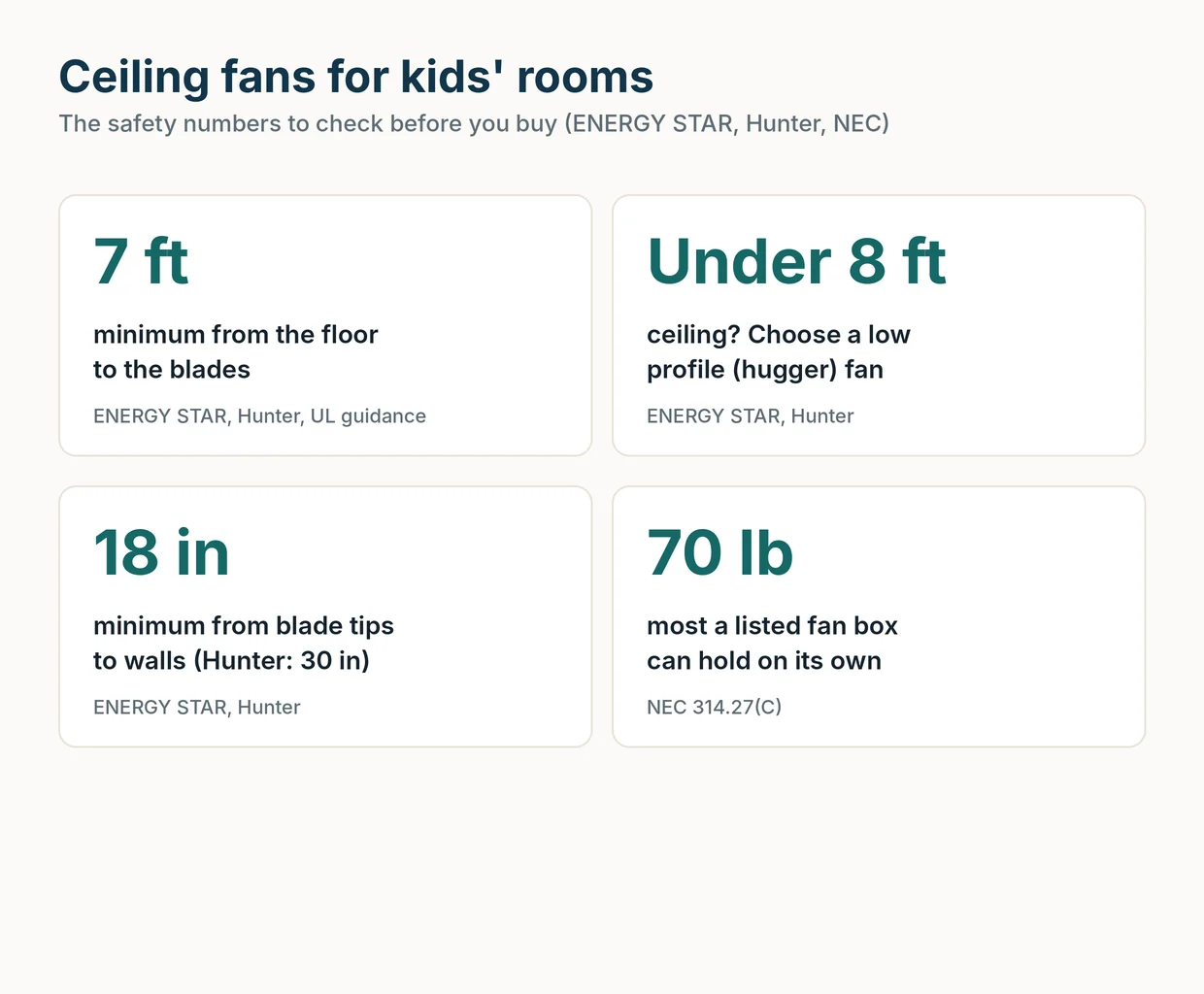
Best Ceiling Fans for Kids' Rooms in 2026: Safe, Simple Picks
Low-profile, remote-controlled and enclosed-blade fans for kids' and teens' bedrooms, plus the height, clearance and mounting rules that keep them safe.
9 min read

Room Ideas
Quietest Ceiling Fans in 2026: Picks for Bedrooms
What independent lab testing says about quiet ceiling fans, six bedroom picks with honest notes on missing noise data, and how to quiet a fan you own.
8 min read